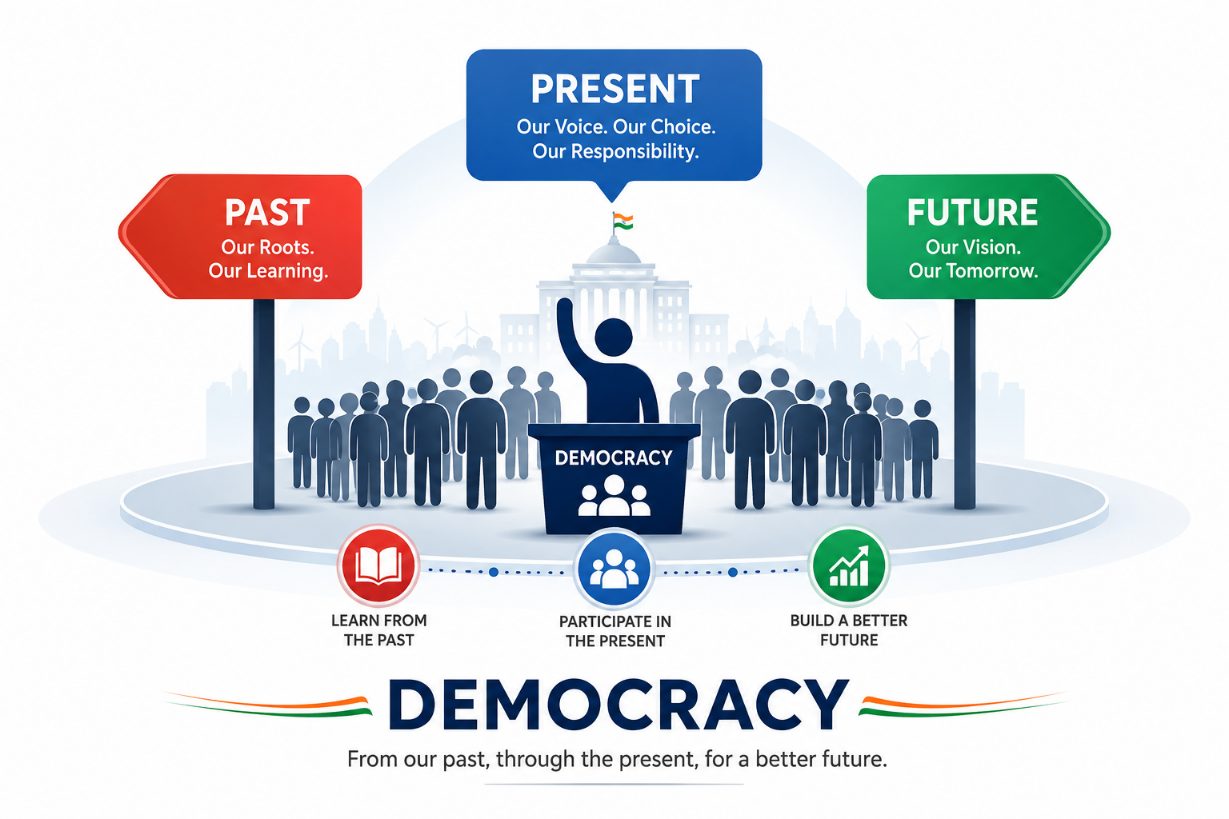
Democracy is a living social philosophy founded on human dignity, equality, justice, liberty, fraternity, and collective responsibility. It enables people to participate in shaping their own future through institutions that reflect public will. It is more than a political system.
A healthy democracy is measured not merely by how governments are elected, but by how truth is respected, justice is delivered, opportunities are shared, and citizens are empowered to influence public life.
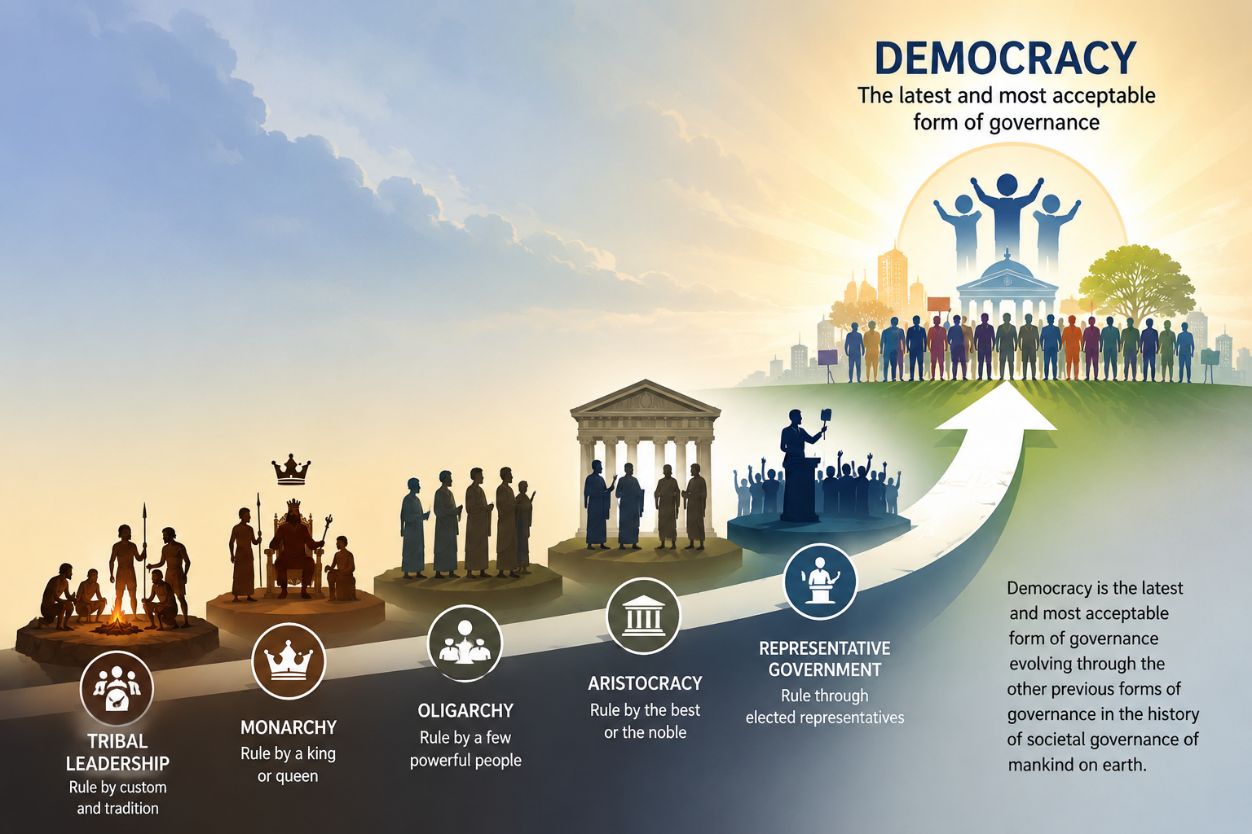
Democracy is the latest and most acceptable form of governance evolving through the other previous forms of governance in the history of societal governance of mankind on earth.
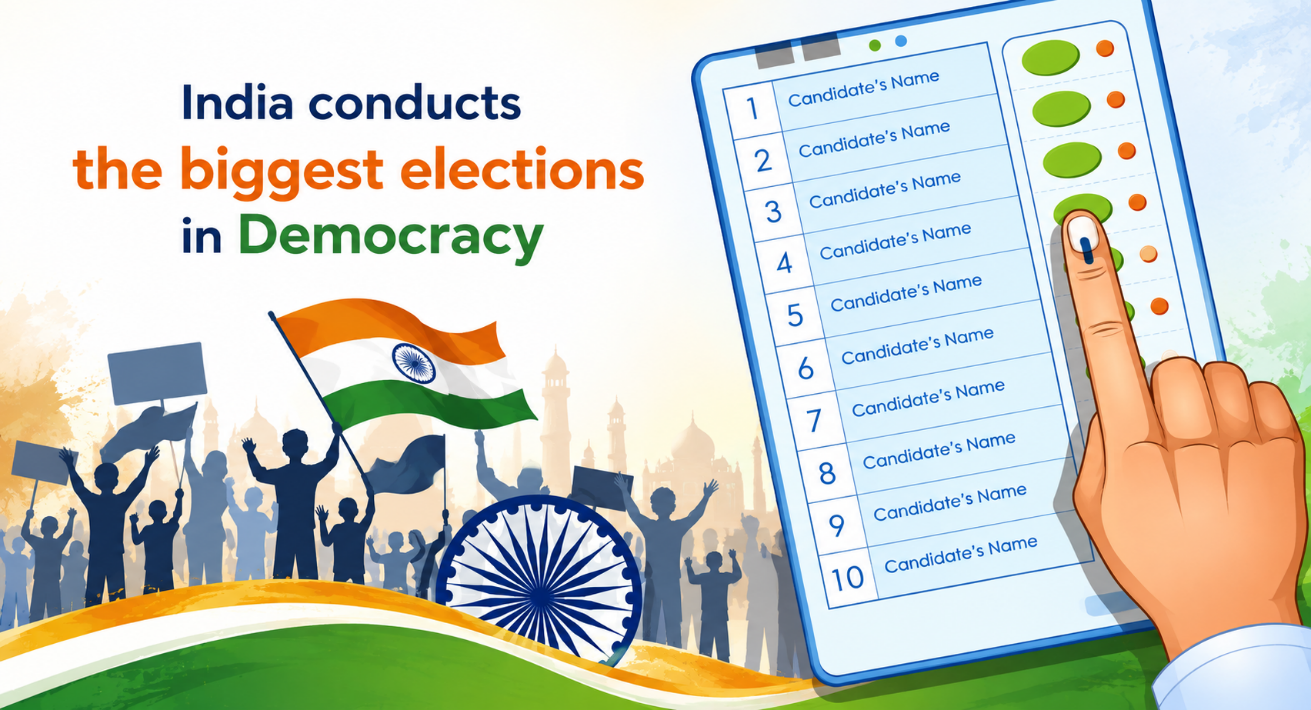
India represents one of humanity's greatest democratic achievements. Its diversity of languages, cultures, religions, and communities demonstrates the remarkable ability of democracy to unite differences within a constitutional framework.
India is the world's largest democracy. Its democratic journey is rooted in a long tradition of self-governance, strengthened during the freedom struggle, and institutionalized through the Constitution adopted in 1950. Since then, regular, free, and fair elections have become the foundation of India's democratic system.
India became a sovereign democratic republic on 26 January 1950. India's first general election was held between October 1951 and February 1952. India has conducted 18 General elections so far during its living with democracy since Independence.
A Truism is a self-evident truth that remains valid regardless of political ideology, geography, or time. Every democracy is guided by principles that remain true across generations. These democratic truisms provide direction for citizens, institutions, and leaders alike.
In democracy, truisms are the timeless principles that keep democratic systems healthy and meaningful.
Fundamental Democratic Truisms:
India is the world's largest democracy and one of humanity's greatest democratic achievements. It has empowered millions of citizens through constitutional values, universal adult franchise, and democratic institutions. Yet, like every evolving democracy, it faces challenges that require honest reflection and collective action.
| No | Truisms | Realisms |
|---|---|---|
| 1. | Free and informed voting. | Money power in elections |
| 2. | Public office requires integrity. | Criminality in politics |
| 3. | Religion should unite, not divide. | Role of Religion |
| 4. | Equal dignity beyond caste. | Role of Caste |
| 5. | Leadership should be earned. | Family Rules in politics |
| 6. | Development over freebies. | Freebies by elected governments |
| 7. | Merit should determine opportunity. | Nepotism |
| 8. | Politics should serve the public. | Politics becoming origin of corruption |
| 9. | Politics should uphold ethics. | Political backstabbing and betrayal |
| 10. | Respect the people's mandate. | Political horse trading |
| 11. | Public office serves the common good. | Rent seeking |
| 12. | Judge leaders by merit. | Hero worship |
| 13. | Unity in diversity. | Social divisions for political gains |
| 14. | Protect institutional integrity. | Lowering Institutional Integrity |
| 15. | Every citizen should participate. | Voter apathy |
Democracy That Works
A democratic idea has value only when it produces meaningful outcomes.
Pragmatic democracy focuses on:
The journey of democracy is shaped by its past, tested in the present, and defined by the future we choose to build.
History provides lessons, achievements, and experiences that help us understand the foundations of democracy.
Current realities reveal both the strengths and the challenges of democratic practice. Honest reflection helps identify opportunities for improvement
The future belongs to those who are willing to innovate, collaborate, and work together to create a more just, inclusive, and people-centered democracy